
Comparison
Cloud versus on-premise versus air-gapped agentic AI
Choose an agentic AI deployment model by data and mission boundaries, runtime dependencies, model location, identity, update paths, evidence custody, operating support and the consequences of lost connectivity.
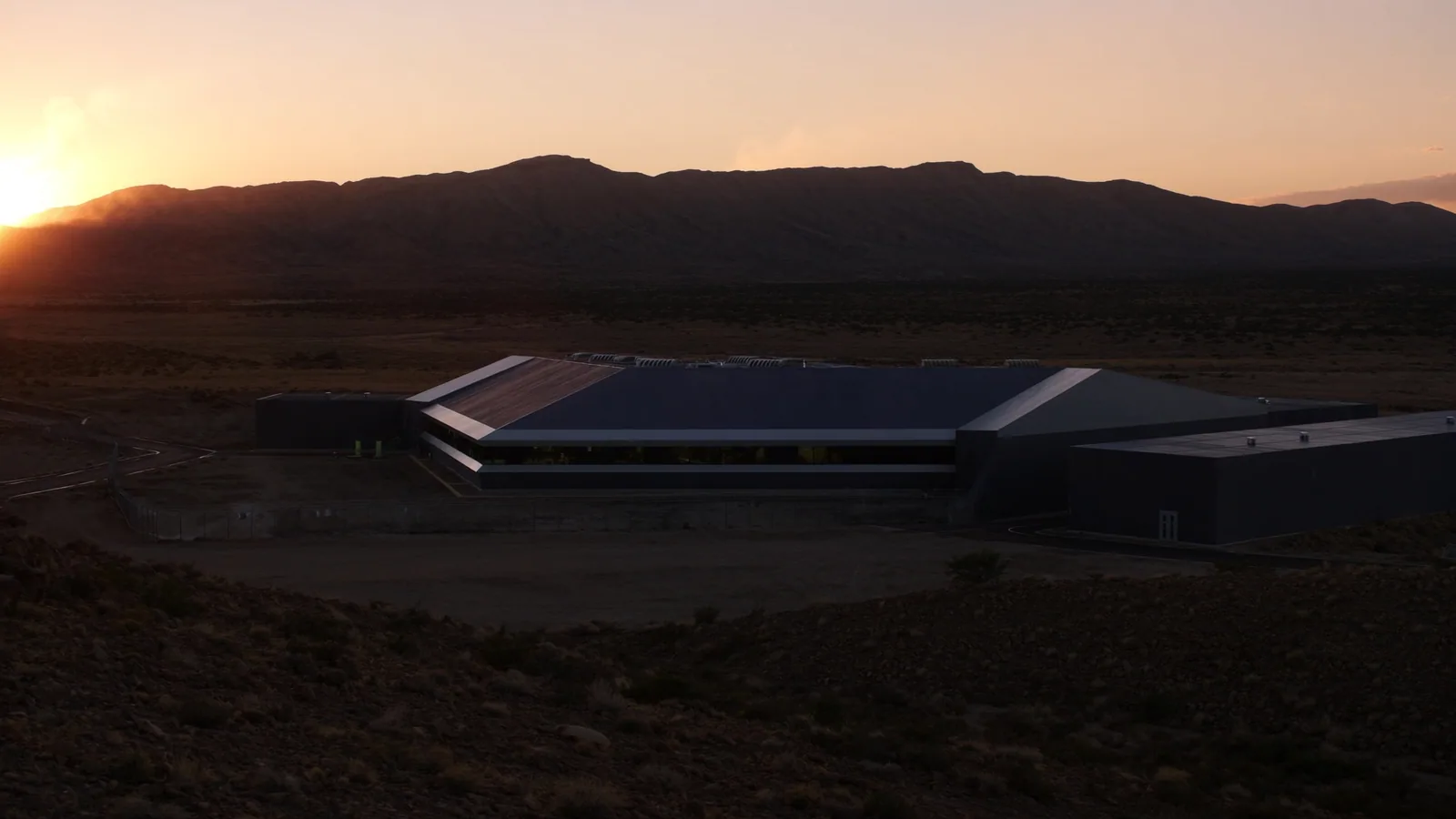
Deployment labels are shortcuts, not architectures. Two products described as on-premise can differ on model endpoints, licensing, identity, telemetry, package retrieval and support. Evaluate the complete dependency graph and operating model.
How do the three deployment models differ?
| Dimension | Cloud | On-premise connected | Air-gapped |
|---|---|---|---|
| Runtime location | Provider or private cloud | Customer-controlled infrastructure | Customer-controlled isolated boundary |
| Internet dependency | Expected | Possible or optional | Prohibited across the gap |
| Model location | Hosted or private endpoint | Local, hosted or mixed | Inside the boundary |
| Identity | Cloud or federated identity | Enterprise identity | In-boundary identity and lifecycle |
| Updates | Online service path | Online or managed package | Controlled transfer and local validation |
| Telemetry | Provider, customer or both | Configurable boundary | Local collection and authorized export |
| Evidence custody | Contract and configuration dependent | Customer or shared | Inside the boundary by default |
| Support | Remote service access may be possible | Remote or customer-mediated | Approved artifacts and local procedures |
An organization may use more than one model. Define where each workflow and data class is allowed to run.
What should the dependency inventory include?
List model endpoints, embeddings, vector stores, identity providers, policy services, secrets, package repositories, licenses, time sources, DNS, telemetry, update channels, vulnerability feeds, support access and evidence stores.
For each dependency, state location, data exchanged, identity used, availability need, failure behavior and owner. Then test the system with the dependency unavailable. A diagram that omits background calls does not establish an isolated deployment.
How should model placement be decided?
Match model capability to the task while respecting data location, handling rules, latency, hardware, energy, update process and provider terms. Retain a dated endpoint manifest and evaluation results for the tasks it is authorized to perform.
Model independence is useful only if policy, tool contracts and evidence survive a route change. Re-evaluate quality and safety before replacing an endpoint.
How do identity and authorization change?
Cloud deployments can often federate existing enterprise identity. On-premise and disconnected environments need an available local source of identity, group or attribute data, credential lifecycle and emergency access.
Authorization should be evaluated at each action regardless of topology. Disconnection is not an excuse to broaden permissions. Cache only the policy data and decisions the operating model can support, with explicit expiry and fail behavior.
How should updates work in a disconnected environment?
Treat every imported model, package, policy and configuration as a controlled supply-chain event. Verify origin and digest, inspect the contents, scan in an approved transfer zone, test compatibility, approve installation, retain evidence and maintain rollback.
Define the reverse flow for logs, incidents and support artifacts. Export only what policy authorizes, and preserve the evidentiary relationship between the exported artifact and the in-boundary source.
What failure behavior should be demonstrated?
Test loss of model service, policy service, identity, evidence store, target system, time source and operator availability. Exercise partial success, ambiguous timeout, duplicate request, full queue and rollback.
For every state, decide whether the agent denies, holds, retries, reconciles, degrades to a bounded mode or requires operator action. The decision should be visible to the user and recorded.
How should teams choose among the options?
Start with mission and data constraints, then compare whole-life operations. Cloud can speed managed delivery. On-premise can increase infrastructure control while retaining selected connectivity. Air-gapped deployment supports disconnected boundaries but transfers update, model, monitoring and support responsibilities inward.
Require an end-to-end demonstration in the proposed topology. Verify the evidence export, not only the happy-path user interface. Record assumptions, residual dependencies and the event that triggers a new architecture review.
Direct answers
Frequently asked questions
Is on-premise the same as air-gapped?
No. On-premise describes where infrastructure runs. An on-premise system may depend on internet services, while an air-gapped system must operate without network connectivity across the boundary.
Can a cloud model be used in an air gap?
Not as a runtime dependency across the disconnected boundary. The model endpoint and every required control service must be available inside the approved environment.
Which deployment is most secure?
No topology is inherently most secure for every mission. Security depends on threats, controls, operations, configuration, people and the consequences of the workload.
How do air-gapped systems receive updates?
Through an authorized transfer process with provenance, review, malware scanning, compatibility tests, controlled installation, rollback and retained evidence.
Where should audit records live?
Place them within the authorized data boundary, protect access and integrity, define retention and export, and retain checkpoints according to the assurance need.
What should a deployment demonstration prove?
It should run the representative workflow in the proposed topology, exercise dependency and recovery failures, and produce release-specific evidence for review.
Reference desk
Primary sources
External standards remain authoritative for their own requirements and status. A Trunnion mapping does not create a certification or authorization.